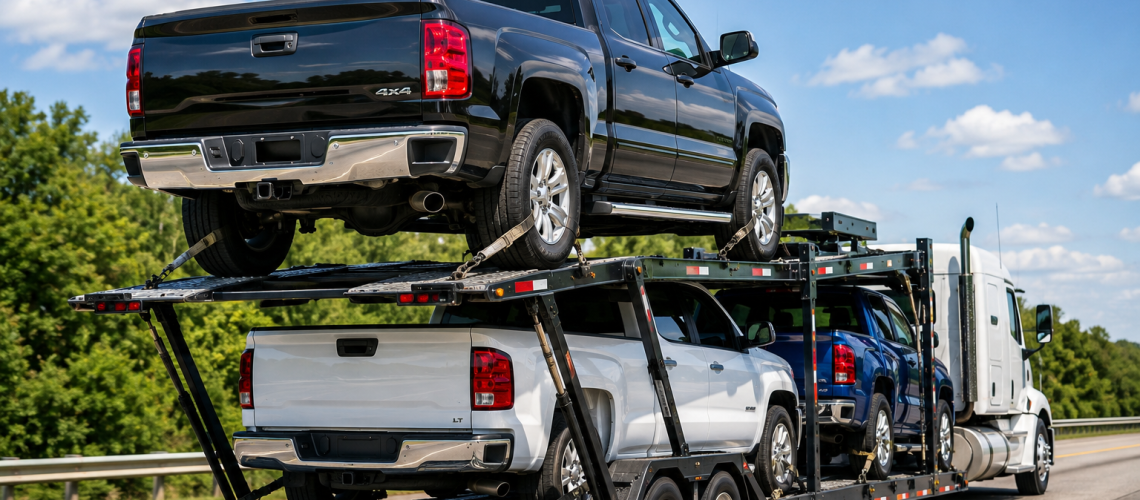
Pickup truck shipping allows owners to move a truck without adding unnecessary driving miles or making a long-distance trip themselves. Because pickups range from compact models to heavy-duty crew-cab trucks, accurate information about size, weight, modifications, operating condition, and route is important before transportation is arranged.
A stock midsize pickup and a lifted heavy-duty truck can have very different carrier requirements. Providing the exact vehicle information from the beginning makes transportation easier to coordinate.
How Does Pickup Truck Shipping Work?
Pickup truck shipping begins with information about the truck and requested transportation route.
Be prepared to provide:
- Year, make, and model
- Cab and bed configuration
- Pickup and delivery locations
- Operating condition
- Significant modifications
- Preferred transportation dates
- Open or enclosed carrier preference
- Oversized tires or lift information
The exact model and configuration matter because different versions of the same pickup can vary considerably in length, height, and weight.
How Does Truck Size Affect Pickup Truck Shipping?
Vehicle dimensions can affect pickup truck shipping because larger trucks require more carrier space than smaller passenger vehicles.
Important characteristics can include:
- Overall length
- Width
- Height
- Weight
- Cab configuration
- Bed length
- Ground clearance
- Wheel and tire size
A regular-cab short-bed truck shouldn’t automatically be treated the same as a crew-cab long-bed model.
Providing accurate configuration information helps the transportation provider evaluate the actual vehicle.
Why Do Weight and Height Matter for Truck Transport?
Auto carriers operate within physical and regulatory limitations. A taller or heavier truck can affect how vehicles are positioned and loaded.
Height becomes particularly important when a truck has modifications such as:
- Lift kits
- Oversized tires
- Roof-mounted equipment
- Suspension changes
- Custom racks
Accurate measurements can help with truck transport planning when a pickup differs significantly from its original factory configuration.
Open vs. Enclosed Pickup Truck Transport
Carrier selection is an important part of pickup truck shipping.
When Does Open Truck Shipping Make Sense?
Open carriers are widely used for vehicle transportation and can accommodate many standard pickup trucks.
Open transportation may be considered for:
- Compact pickups
- Midsize trucks
- Full-size pickups
- Work trucks
- Dealer purchases
- Many stock factory trucks
Vehicles on an open carrier experience normal outdoor weather and road exposure.
When Should You Consider Enclosed Vehicle Shipping?
Enclosed transportation places the vehicle inside a covered trailer and reduces direct exposure to outside weather and normal road conditions.
An owner may consider enclosed transportation for a:
- Collector pickup
- Restored truck
- Luxury pickup
- Rare model
- Custom show truck
- Vehicle with specialty paint
The truck’s dimensions must also be compatible with the available enclosed equipment.
How Should You Prepare for Pickup Truck Shipping?
Before pickup truck shipping, make sure the vehicle is accessible and ready for transportation.
Consider these steps:
- Remove valuables and unnecessary belongings.
- Have all required keys ready.
- Secure loose accessories.
- Check for significant fluid leaks.
- Disclose known mechanical problems.
- Document modifications.
- Confirm contact information.
- Take condition photographs.
Pay particular attention to equipment installed in or around the truck bed.
Do Modifications Affect Pickup Truck Transport?
Yes. Aftermarket modifications can significantly change a pickup’s dimensions and loading considerations.
Tell the transportation provider about:
- Lift kits
- Oversized wheels and tires
- Custom bumpers
- Running boards
- Bed racks
- Toolboxes
- Camper shells
- Tonneau covers
- Suspension modifications
- Exterior-mounted equipment
When arranging pickup truck shipping, describe the vehicle as it exists today rather than relying only on standard specifications for the model.
What Should You Photograph Before Pickup?
Create a clear record of the truck’s condition before transportation.
Photograph:
- Front
- Rear
- Both sides
- Roof
- Wheels and tires
- Windshield
- Bumpers
- Truck bed
- Tailgate
- Existing scratches
- Existing dents
- Aftermarket equipment
Don’t overlook the roof, bed, and tailgate.
Condition photographs provide useful documentation before truck vehicle transport and can be referenced again when the pickup arrives.
Can a Lifted Truck Be Shipped?
Potentially, but the amount of lift and overall vehicle dimensions matter.
Tell the transportation provider about the:
- Lift height
- Overall truck height
- Tire size
- Suspension modifications
- Custom bumpers
- Other equipment affecting dimensions
A heavily lifted truck can have different carrier requirements from the same model in factory configuration.
Providing this information early is particularly important for pickup truck shipping because height and carrier space can affect transportation arrangements.
Should You Empty the Truck Bed?
Remove valuables and unnecessary loose items from the bed before transportation.
Pay attention to:
- Tools
- Cargo
- Loose accessories
- Removable bed equipment
- Other unsecured objects
If the truck has a toolbox, tonneau cover, camper shell, or permanently installed equipment, tell the transportation provider about it.
Proper preparation can reduce preventable complications during pickup truck transport.
Can a Carrier Pick Up From Your Home?
Pickup may be coordinated as close to the requested address as safely and legally practical.
Large auto carriers need substantial maneuvering room, and potential obstacles include:
- Narrow streets
- Tight corners
- Low branches
- Steep driveways
- Gated entrances
- Weight restrictions
- Limited loading areas
If direct access isn’t practical, a nearby accessible meeting point may be needed.
Planning for carrier access beforehand can make pickup truck shipping easier to coordinate on pickup day.
How Does Distance Affect Truck Vehicle Shipping?
Distance is an important transportation factor, but it doesn’t determine the schedule by itself.
Timing can also be affected by:
- Route
- Carrier availability
- Pickup location
- Destination
- Weather
- Traffic
- Construction
- Other scheduled stops
- Road closures
Longer routes generally require more transit time, but mileage alone shouldn’t be used to promise an exact delivery date.
Realistic scheduling is an important part of truck vehicle shipping.
Does Pickup Truck Size Affect Shipping Cost?
It can. Vehicle dimensions and weight can affect pickup truck shipping because a large truck may require more carrier space than a standard passenger automobile.
Other pricing factors can include:
- Transportation distance
- Route
- Pickup and delivery locations
- Carrier availability
- Operating condition
- Open or enclosed equipment
- Seasonal demand
A quote should be based on the actual truck rather than assuming every pickup costs the same amount to transport.
What Happens at Truck Transport Pickup?
Have the pickup accessible and make sure the appropriate keys and contact person are available.
Confirm that important vehicle characteristics have been communicated, including:
- Operating condition
- Overall size
- Lift kit
- Oversized tires
- Bed accessories
- Other modifications
Clear communication at pickup supports pickup truck shipping by reducing the chance that important information is discovered only when loading begins.
Can Weather Affect Pickup Truck Shipping?
Yes. Auto carriers travel on public highways and can encounter rain, snow, ice, severe storms, high winds, accidents, construction, and road closures.
These conditions can affect transportation schedules.
Weather and highway conditions are therefore part of realistic pickup truck shipping planning, especially on longer interstate routes.
What Should You Check After Truck Transport?
Compare the truck with your pre-transport photographs when it arrives.
Inspect:
- Body panels
- Wheels and tires
- Glass
- Bumpers
- Roof
- Truck bed
- Tailgate
- Exterior accessories
- Previously documented marks
Having the original photographs available makes the comparison easier.
A careful delivery inspection completes an important part of truck transport.
How Do You Research a Pickup Truck Transport Provider?
Price is important, but it shouldn’t be the only consideration when arranging pickup truck shipping.
Make sure the transportation provider understands the exact truck, including its cab and bed configuration, dimensions, operating condition, modifications, pickup location, destination, and carrier preference.
Consumers can research motor carrier information through the Federal Motor Carrier Safety Administration and federal transportation information through the U.S. Department of Transportation.
Webster Hauling also has an A+ rating with the Better Business Bureau.
Accurate information and provider research are important parts of arranging truck vehicle transport.
Pickup Truck Shipping FAQs
Does a Large Pickup Cost More to Ship?
It can. Vehicle size and weight can affect carrier space and transportation pricing. Distance, route, vehicle condition, carrier type, and availability can also influence the quote.
Can a Lifted Truck Use Auto Transport?
Potentially. Provide the overall height, lift information, tire size, and other modifications when arranging pickup truck shipping so the vehicle can be evaluated accurately.
Can a Crew-Cab Long-Bed Truck Be Shipped?
Potentially. Its additional length and weight should be disclosed before transportation is arranged because those characteristics can affect carrier space.
Should I Remove Equipment From the Truck Bed?
Remove loose valuables and unnecessary cargo. Tell the transportation provider about installed equipment such as toolboxes, camper shells, bed racks, or other accessories.
Can a Dealer Release My Pickup to the Carrier?
Depending on the arrangements, pickup may be coordinated with a dealership or seller. Confirm that the truck is ready for release and that keys, access, and the appropriate contact person will be available.
For additional answers about transportation, visit Webster Hauling’s Frequently Asked Questions page.
Plan Your Pickup Truck Shipping
Successful pickup truck shipping begins with accurate information about the actual vehicle.
Truck dimensions, weight, cab and bed configuration, modifications, operating condition, carrier availability, route, pickup access, and weather can all influence transportation.
Webster Hauling helps customers coordinate vehicle transportation based on their vehicle, route, and shipping requirements.
Have the truck’s year, make, model, configuration, operating condition, modifications, pickup location, destination, and preferred transportation dates available when discussing your shipment.
