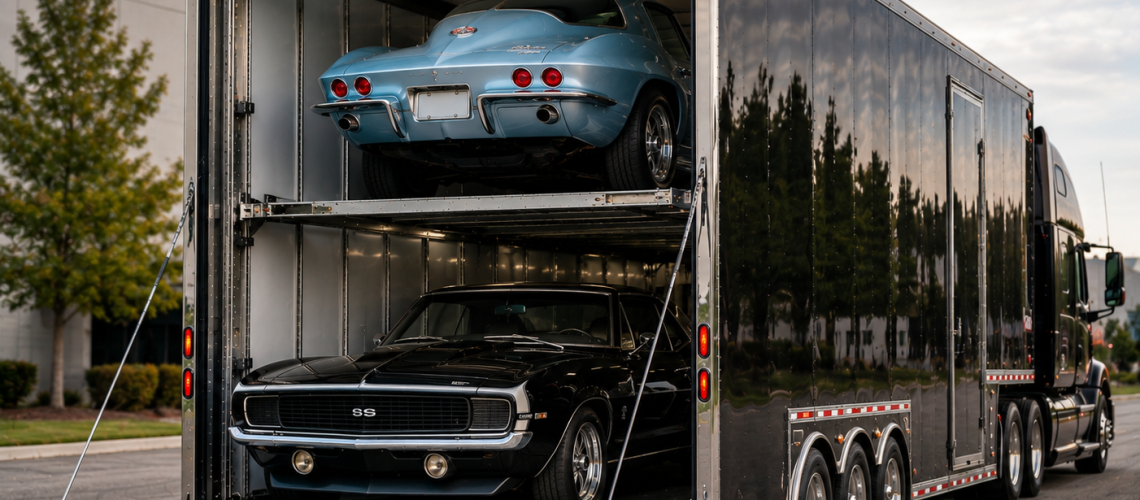
Classic car shipping requires more planning than simply handing over the keys and waiting for delivery. Vehicle condition, ground clearance, modifications, carrier type, pickup access, documentation, and the level of protection you want should all be considered before transportation begins.
For a restored muscle car, vintage sports car, collector vehicle, or family classic with sentimental value, understanding the transportation process can help you make better decisions before pickup.
How Does Classic Car Shipping Work?
The classic car shipping process generally begins with detailed information about the automobile and transportation route.
You should be prepared to provide:
- Year, make, and model
- Pickup and delivery locations
- Vehicle operating condition
- Ground clearance
- Significant modifications
- Preferred transportation dates
- Open or enclosed carrier preference
Accurate information is particularly important with older automobiles because their condition and configuration may differ considerably from when they left the factory.
Should You Choose Enclosed Classic Car Transport?
Enclosed classic car transport provides a physical barrier between the automobile and direct outside weather and road exposure.
An enclosed carrier may be worth considering for a vehicle that is:
- Fully restored
- Rare or collectible
- Recently painted
- Highly customized
- Particularly valuable
- Difficult to replace
- Important for sentimental reasons
Enclosed transportation isn’t automatically required simply because a car is old. The appropriate choice depends on the particular automobile and the owner’s priorities.
What Protection Does an Enclosed Carrier Provide?
A covered trailer reduces direct exposure to conditions such as rain, snow, road spray, dust, sunlight, and normal highway debris.
That can be particularly attractive when shipping a collector vehicle with an expensive finish or extensive restoration work.
The carrier itself still travels on public highways, so weather and road conditions can affect transportation timing even though the automobile is inside the trailer.
Open vs. Enclosed Shipping for a Classic Vehicle
Both carrier types can move automobiles, but they provide different transportation environments.
When Does Open Auto Transport Make Sense?
Open carriers have uncovered loading decks and are commonly used throughout the vehicle transportation industry.
A classic automobile transported this way experiences normal outdoor weather and road exposure.
Some owners may consider open transportation appropriate depending on their vehicle’s condition, value, and intended use.
When Is Enclosed Classic Car Shipping Worth Considering?
With enclosed classic car shipping, the automobile travels inside a covered trailer.
Owners of restored, rare, show-quality, or particularly valuable automobiles may prefer this additional separation from outside conditions.
The decision should be based on your specific vehicle rather than a blanket rule for every classic car.
How Should You Prepare a Classic Car for Shipping?
Before classic car shipping, give yourself enough time to prepare and document the automobile.
Consider these steps:
- Remove valuables and unnecessary belongings.
- Have all required keys ready.
- Secure loose accessories.
- Check for significant fluid leaks.
- Confirm the battery condition.
- Disclose mechanical issues.
- Explain unusual starting procedures.
- Document modifications.
- Confirm contact information.
- Take detailed photographs.
Older vehicles sometimes have unique operating procedures. If your automobile requires a particular starting sequence, battery disconnect, choke procedure, or other special handling, communicate that information beforehand.
Why Does Ground Clearance Matter?
Many restored and performance-oriented classics sit lower than ordinary passenger vehicles.
Low ground clearance can affect loading angles and equipment requirements.
Tell the transportation provider about:
- Lowered suspension
- Front spoilers
- Splitters
- Side exhaust
- Custom bodywork
- Long overhangs
- Oversized wheels
- Other clearance concerns
Accurate information helps the provider understand the automobile before the carrier arrives.
Why Modifications Matter During Collector Car Transport
A decades-old vehicle may no longer match its original factory specifications.
Restoration and customization can change its:
- Ride height
- Width
- Tire size
- Weight
- Body dimensions
- Starting procedure
- Mechanical operation
When arranging collector car transport, describe the automobile as it exists today rather than relying solely on its original model specifications.
What Should You Photograph Before Pickup?
Documentation is especially important with classic and collector automobiles.
Take clear photographs of:
- Front
- Rear
- Both sides
- Roof
- Wheels
- Windshield
- Interior
- Existing scratches or chips
- Existing dents
- Chrome and trim
- Custom or restored components
Photograph the vehicle in good lighting when possible.
Keep the original images until transportation and delivery are complete.
Can a Non-Running Classic Car Be Shipped?
Potentially, but its exact condition matters.
Tell the provider whether the automobile:
- Starts
- Drives
- Rolls
- Steers
- Brakes
A classic car that doesn’t start but rolls freely presents a different loading situation from a restoration project with seized wheels or missing components.
Providing accurate information when arranging classic vehicle transport allows loading requirements to be evaluated beforehand.
Should You Wash the Car Before Transport?
A reasonably clean exterior can make existing scratches, paint chips, dents, and other marks easier to document before pickup.
The goal isn’t necessarily to prepare the automobile for a show.
The important part is being able to clearly photograph and inspect its existing condition.
This is particularly useful for restored vehicles with high-quality paintwork.
Can a Carrier Pick Up a Classic Car at Your Home?
Pickup may be coordinated as close to the requested location as safely and legally practical.
However, large carriers need considerable maneuvering space.
Potential problems include:
- Narrow residential streets
- Tight corners
- Low tree branches
- Steep driveways
- Gated entrances
- Weight restrictions
- Limited loading space
If your location isn’t suitable, you and the driver may need to coordinate a nearby accessible meeting point.
How Long Does Classic Car Shipping Take?
The timeline for classic car shipping depends on the particular shipment.
Factors can include:
- Distance
- Route
- Carrier availability
- Open or enclosed equipment
- Pickup location
- Destination
- Weather
- Traffic
- Road conditions
- Scheduled stops
Longer routes generally require more transit time, but distance alone shouldn’t be used to promise an exact delivery date.
Can Weather Affect Enclosed Auto Transport?
Yes.
An enclosed trailer protects the automobile from direct exposure, but the truck still travels through real highway conditions.
Snow, ice, severe storms, flooding, high winds, accidents, construction, and road closures can affect classic vehicle shipping schedules.
Safe transportation should take priority when highway conditions become dangerous.
What Should You Check When Your Classic Car Arrives?
Inspect the automobile carefully at delivery.
Compare it with:
- Your pre-transport photographs
- Notes about existing condition
- Applicable transportation documentation
Look at the same body panels, wheels, glass, trim, and restored areas you documented before pickup.
Using consistent before-and-after documentation makes the inspection easier.
How Do You Research a Classic Car Transport Provider?
When comparing transportation providers, don’t make the decision solely on price.
Make sure the provider understands:
- The exact automobile
- Its operating condition
- Ground clearance
- Modifications
- Pickup and delivery locations
- Preferred dates
- Your carrier preference
- Any unusual handling considerations
Consumers can research motor carrier information through the Federal Motor Carrier Safety Administration and review federal transportation information through the U.S. Department of Transportation.
Webster Hauling also has an A+ rating with the Better Business Bureau.
Classic Car Shipping FAQs
Is Enclosed Transport Better for a Classic Car?
Enclosed classic car transport provides additional protection from direct weather and road exposure. Whether you need it depends on the automobile’s condition, rarity, restoration, value, and your preferences.
Can a Restored Vehicle Be Shipped Long Distance?
Yes, depending on the transportation arrangements. Accurate vehicle information, careful documentation, appropriate carrier selection, and realistic scheduling are important for restored vehicle shipping.
Can a Classic Car That Doesn’t Run Be Transported?
Potentially. Tell the provider whether it starts, drives, rolls, steers, and brakes so the loading requirements can be evaluated.
Should I Photograph My Collector Car Before Pickup?
Yes. Detailed photographs provide a useful record of the vehicle’s condition before collector car shipping begins.
Does Someone Need to Be Available at Delivery?
Delivery arrangements require access to the automobile and completion of the appropriate transportation procedures. If you can’t be present, discuss whether another authorized person can handle delivery.
For additional information, visit Webster Hauling’s Frequently Asked Questions page.
Plan Your Classic Car Shipping
Successful classic car shipping starts with understanding the automobile rather than treating it like any other vehicle.
Condition, ground clearance, modifications, restoration work, carrier choice, route, documentation, pickup accessibility, and the owner’s desired level of protection can all affect the transportation plan.
Webster Hauling helps customers coordinate vehicle transportation based on their automobile, route, and shipping requirements.
Have the year, make, model, operating condition, modifications, pickup location, destination, and preferred transportation dates available when discussing your classic vehicle.
