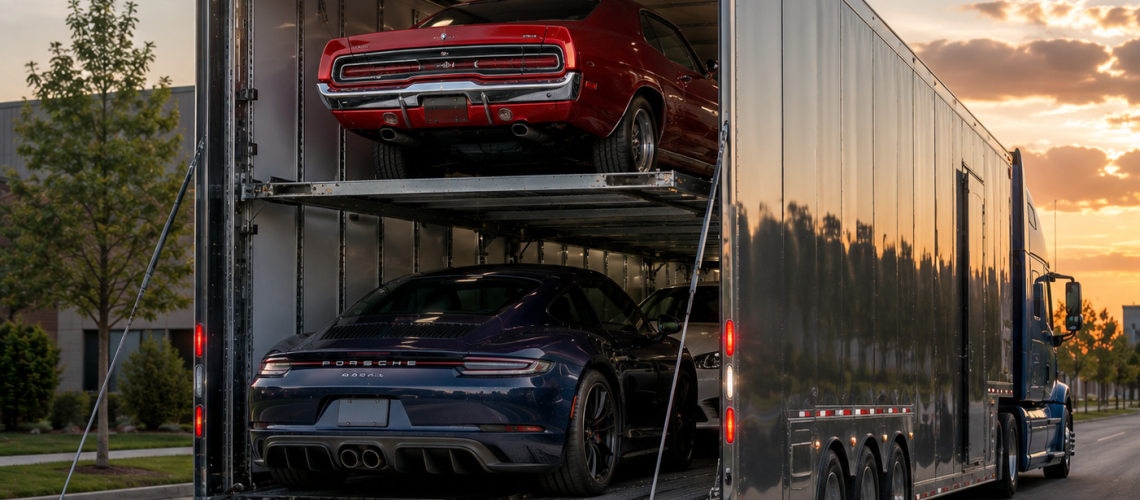
Enclosed vehicle transport moves an automobile inside a covered carrier rather than on an exposed open trailer. The enclosed structure provides additional protection from direct weather and road exposure while the vehicle is being transported.
This transportation method can be worth considering for classic cars, collector automobiles, exotic vehicles, luxury cars, restored vehicles, and other automobiles whose owners want additional protection during shipping.
What Is Enclosed Vehicle Transport?
Enclosed vehicle transport uses a covered trailer designed to shield automobiles from direct exposure to outside conditions during transportation.
Unlike an open carrier, the vehicle travels inside the trailer.
The transportation process generally involves:
- Providing vehicle and route information
- Discussing transportation requirements
- Coordinating pickup
- Preparing and inspecting the automobile
- Loading it into the enclosed carrier
- Securing it for transportation
- Transporting it toward the destination
- Coordinating delivery
- Completing a final inspection
The primary difference from open transportation is the covered environment surrounding the automobile.
What Protection Does Enclosed Auto Transport Provide?
The main reason owners consider enclosed auto transport is additional protection from direct outside exposure.
An enclosed trailer can help shield the automobile from direct contact with:
- Rain
- Snow
- Dust
- Road debris
- Sun exposure
- Other normal road conditions
That doesn’t mean transportation is risk-free. Vehicle shipping still involves loading, unloading, highway travel, and other transportation activities.
However, the enclosed trailer creates a physical barrier between the automobile and outside road conditions.
Which Cars Are Good Candidates for Enclosed Vehicle Transport?
Enclosed vehicle transport may be particularly attractive for automobiles such as:
- Classic cars
- Collector vehicles
- Exotic automobiles
- Luxury vehicles
- Restored cars
- Custom automobiles
- Rare vehicles
- Particularly valuable automobiles
The decision doesn’t have to be based solely on the vehicle’s market value.
An automobile may have sentimental importance or a restoration that makes additional protection worthwhile to its owner.
Enclosed Car Shipping vs. Open Auto Transport
Understanding the differences between the two carrier types can make the choice easier.
How Open Vehicle Shipping Works
Open carriers transport automobiles on exposed loading decks.
They’re commonly used for everyday passenger vehicles and can carry several cars, SUVs, pickups, and vans.
Vehicles experience normal weather and road exposure during the trip.
How Enclosed Car Shipping Works
With enclosed car shipping, the automobile travels inside a covered trailer.
This reduces direct exposure to outside weather and road conditions.
Owners deciding between the two should consider the vehicle, transportation distance, desired protection, carrier availability, and their own preferences.
Does Enclosed Transport Keep a Car Cleaner?
A covered trailer can reduce direct exposure to many of the conditions that can leave an automobile dirty during highway transportation.
Open carriers travel through changing environments that can include rain, dust, road spray, and other normal highway conditions.
Because enclosed vehicle transport places the automobile inside a trailer, direct exposure to those conditions is reduced.
For a freshly detailed, restored, or show-oriented automobile, that may be an important consideration.
How Should You Prepare for Enclosed Auto Shipping?
Even though the automobile travels inside a trailer, preparation still matters.
Before enclosed auto shipping:
- Remove valuables and unnecessary belongings.
- Have all required keys available.
- Make sure the vehicle is accessible.
- Secure loose accessories.
- Check for significant fluid leaks.
- Disclose known mechanical issues.
- Mention vehicle modifications.
- Confirm contact information.
- Photograph the automobile.
Accurate preparation can help prevent unnecessary problems when the carrier arrives.
Why Vehicle Dimensions Matter for Enclosed Car Transport
Vehicle dimensions can be especially important when arranging transportation inside a covered trailer.
Tell the provider about significant modifications such as:
- Lowered suspension
- Lift kits
- Oversized tires
- Custom bodywork
- Front splitters
- Roof accessories
- Wide-body modifications
An automobile that differs significantly from factory specifications may require different loading considerations.
Providing accurate information before enclosed vehicle transport helps the provider understand the automobile being shipped.
What Happens During an Enclosed Transport Inspection?
Document the vehicle’s condition before loading.
Take clear photographs showing:
- Front
- Rear
- Both sides
- Wheels
- Windshield
- Body panels
- Existing scratches
- Existing dents
- Other noticeable marks
For collector or restored automobiles, additional close-up photographs can be useful.
Keep these images until transportation is complete.
They provide a visual record of the automobile before covered vehicle transport begins.
Can Low-Clearance Cars Use Enclosed Vehicle Transport?
Low-clearance automobiles may require additional consideration during loading.
Examples can include:
- Exotic cars
- Sports cars
- Lowered vehicles
- Custom automobiles
- Certain classic cars
When requesting enclosed vehicle transport, disclose low ground clearance and modifications beforehand.
Don’t assume the carrier will automatically know about aftermarket suspension or body components based only on the vehicle’s make and model.
Providing this information allows loading requirements to be discussed before pickup.
Can Non-Running Cars Use Enclosed Auto Transport?
Possibly, depending on the automobile’s condition and the carrier’s equipment.
Explain whether the vehicle:
- Starts
- Drives
- Rolls
- Steers
- Brakes
A vehicle that doesn’t start but rolls freely can present a different loading situation from one with locked wheels or significant damage.
Discuss the condition when arranging enclosed auto transport, not after the carrier arrives.
Is Enclosed Vehicle Shipping Only for Classic Cars?
No.
Classic and collector automobiles are common candidates, but enclosed vehicle shipping can be considered for many types of vehicles.
An owner might choose enclosed transportation for a:
- New luxury automobile
- Exotic car
- Performance vehicle
- Custom build
- Restored truck
- Rare SUV
- Sentimental vehicle
The decision ultimately depends on how much additional protection the owner wants during transportation.
Does Enclosed Transport Affect Carrier Availability?
Carrier availability can differ between open and enclosed transportation.
Open carriers are commonly seen moving everyday vehicles, while enclosed equipment serves a more specialized transportation need.
If enclosed transportation is important to you, discuss that preference when planning the shipment rather than assuming the same equipment will always be available.
Scheduling flexibility may also help when coordinating specialized covered car shipping.
How Long Does Enclosed Vehicle Transport Take?
The transportation timeline depends on more than whether the trailer is enclosed.
Factors affecting enclosed vehicle transport can include:
- Distance
- Route
- Pickup location
- Destination
- Carrier availability
- Weather
- Traffic
- Road conditions
- Transportation schedule
Longer routes generally require more transit time, but mileage alone doesn’t establish an exact arrival date.
Weather and traffic can still affect an enclosed carrier even though the automobile itself is protected inside the trailer.
Is Enclosed Car Transport Worth Considering for Long Trips?
Distance can be part of the decision.
The longer an automobile travels, the longer it would otherwise be exposed to changing road and weather conditions on an open carrier.
For an everyday commuter vehicle, open transportation may still meet the owner’s needs.
For a rare, restored, exotic, or especially valuable automobile, enclosed car transport may offer a level of protection the owner considers worthwhile.
How Do You Choose an Enclosed Auto Transport Provider?
Don’t evaluate transportation based only on price.
Make sure the provider understands your:
- Exact vehicle
- Vehicle condition
- Ground clearance
- Significant modifications
- Pickup location
- Destination
- Preferred dates
- Enclosed transportation requirement
Consumers can research motor carrier information through the Federal Motor Carrier Safety Administration and review federal transportation information through the U.S. Department of Transportation.
Webster Hauling also has an A+ rating with the Better Business Bureau.
Enclosed Vehicle Transport FAQs
Does Enclosed Vehicle Transport Protect Cars From Weather?
Enclosed vehicle transport places the automobile inside a covered trailer, reducing direct exposure to rain, snow, dust, road spray, and other outside conditions.
Is Enclosed Car Shipping Only for Expensive Vehicles?
No. Owners may choose enclosed car shipping because of monetary value, sentimental importance, restoration work, rarity, or simply a preference for additional protection.
Can a Classic Car Use Enclosed Auto Transport?
Yes. Classic and collector automobiles are common candidates for enclosed auto transport, particularly when owners want additional protection from direct road and weather exposure.
Can a Low Sports Car Be Shipped Enclosed?
Potentially. Tell the transportation provider about low ground clearance, suspension modifications, splitters, or other relevant features before arranging transportation.
Can Weather Still Delay Enclosed Vehicle Shipping?
Yes. The trailer protects the automobile from direct exposure, but the carrier itself still travels on public roads. Severe weather, unsafe roads, closures, and traffic can affect the transportation schedule.
For more information about vehicle transportation, visit Webster Hauling’s Frequently Asked Questions page.
Arrange Enclosed Vehicle Transport
Enclosed vehicle transport can provide additional protection for owners who want to reduce their automobile’s direct exposure to weather and normal road conditions during shipping.
Vehicle value, condition, modifications, ground clearance, transportation distance, and personal preference can all influence whether enclosed transportation makes sense.
Webster Hauling helps customers coordinate vehicle transportation based on their automobile, route, and shipping requirements.
Have your vehicle year, make, model, condition, pickup location, destination, modifications, and preferred dates ready when discussing enclosed transportation.
