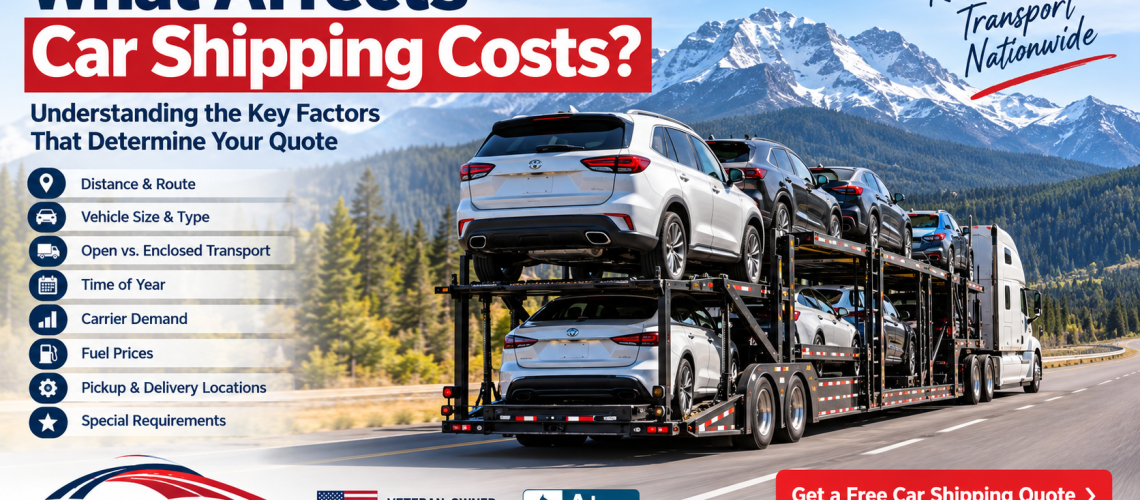
Car shipping costs · Webster Hauling · Pricing factors explained
What Affects Car Shipping Costs?
Car shipping costs change with distance, route, vehicle size, transport type, operating condition, timing, season and carrier availability.
Because every shipment is different, a realistic quote should reflect the actual vehicle, route and pickup timing. Therefore, this page explains the specific factors that can move a transport price higher or lower.
For historical customer pricing and completed-order examples, visit our main car shipping cost page.
- Veteran-owned and operated
- A+ Better Business Bureau rating
- 25+ years of auto transport experience
- Open and enclosed carrier options
- Route-specific pricing based on current conditions
Request Your Auto Transport Quote
First, enter your route, contact information and first available pickup date.
The main pricing variables
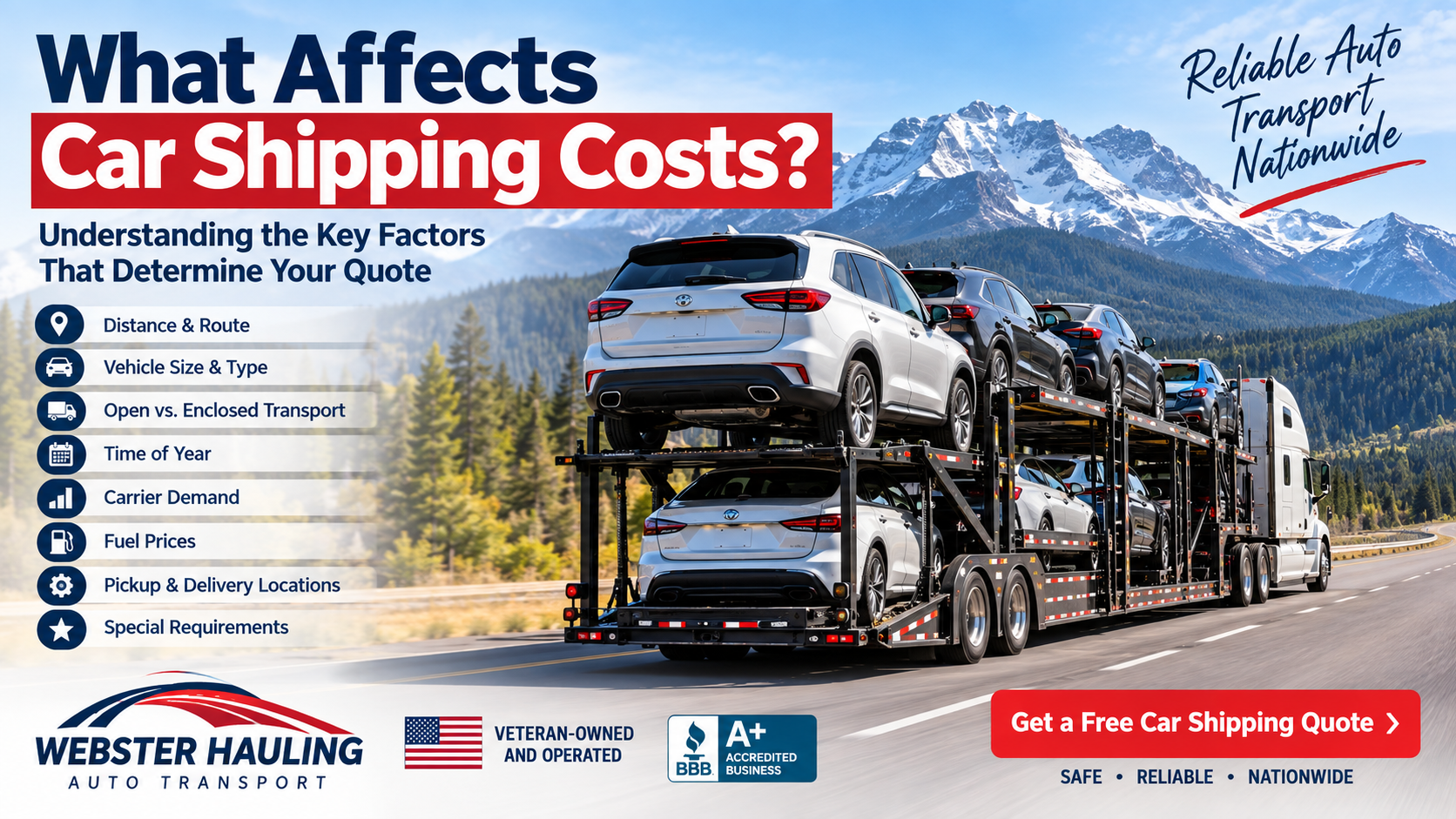
Eight Factors That Change Car Shipping Costs
Overall, several details work together when a carrier evaluates a shipment. In addition, the effect of one factor can change as the market changes.
1. Distance and Route
Generally, longer trips increase the total transportation price. However, route strength and carrier traffic can matter as much as mileage.
2. Vehicle Size and Car Transport Prices
For example, larger SUVs, pickups and vans use more trailer space. As a result, vehicle dimensions can affect available capacity and pricing.
3. Vehicle Condition
Likewise, a non-running vehicle may need winch-capable equipment. Therefore, tell us whether the vehicle starts, rolls, steers and brakes.
4. Open or Enclosed Auto Transport Pricing
Generally, open equipment is common for everyday vehicles. By comparison, enclosed equipment is more specialized and generally costs more.
5. Pickup Access and Vehicle Shipping Rates
In addition, large carriers need safe access at both ends. Consequently, remote or difficult locations can require extra travel away from common lanes.
6. Pickup Timing
For example, car shipping costs can rise when a shipment has a very tight pickup deadline. More flexibility can create additional carrier options.
7. Seasonal Demand
Meanwhile, demand changes during the year. For example, summer moves, snowbird traffic, holidays and weather can influence carrier availability.
8. Carrier Availability
Meanwhile, available trucks change from route to route. Therefore, current carrier activity can affect how strongly a shipment must be priced.
Why route matters
Distance, Route and Vehicle Shipping Rates
Two shipments with similar mileage can still have different prices. For example, a major metro lane may attract more carriers.
Meanwhile, a remote pickup or delivery can require a carrier to leave a stronger route. That additional travel can change the offer needed.
For route planning, review our nationwide car transport routes.
A useful comparison
Route Strength Can Matter as Much as Mileage
Mileage provides a starting point, but carriers also consider where the shipment fits into the rest of their trip.
Therefore, two routes with similar distances can produce different transportation prices. Pickup access, delivery access and nearby freight also matter.
Timing matters too
Why Timing Changes Car Shipping Costs
Your first available pickup date tells us when the vehicle can actually be released. It is different from the quote-request date.
If a vehicle must move immediately, fewer carriers may fit the schedule. As a result, the shipment may need a stronger offer.
On the other hand, additional flexibility can create more scheduling choices. Therefore, accurate timing helps us evaluate the route realistically.
Choosing carrier equipment
Open and Enclosed Auto Transport Pricing
Equipment choice changes both availability and capacity. Therefore, the right option depends on the vehicle and the protection you want.
Open Car Transport
Open carriers move multiple vehicles on exposed decks. Because more open equipment operates nationwide, this option often has greater availability.
Enclosed Vehicle Transport
Enclosed carriers use covered trailers and carry fewer vehicles. Consequently, enclosed service generally costs more than standard open transport.
Vehicle Condition
Non-running vehicles can require additional loading equipment. Therefore, accurate condition information helps prevent equipment problems at pickup.
Avoid misleading estimates
Car Transport Prices and Low Estimates
First, online estimates can provide a starting point. However, they may not reflect the carrier market for your exact route and dates.
A number far below current conditions may fail to attract a carrier. Therefore, compare more than the advertised price.
Ask what the quote includes and how pickup timing works. In addition, ask what happens if the original offer attracts no truck.
Keep the page purpose clear
Use the Main Cost Page for Historical Pricing
This page explains the variables that change transportation pricing. By comparison, our main pricing page contains historical customer price examples.
Information needed for pricing
Details That Help Us Evaluate a Shipment
- Pickup ZIP code or city and state
- Delivery ZIP code or city and state
- Vehicle year, make and model
- Whether the vehicle starts and drives
- First available pickup date
- Open or enclosed transport preference
- Lift kits, oversized tires or other modifications
- Unusual pickup or delivery conditions
Accurate information helps us evaluate the shipment before discussing carrier options. As a result, the quote can better reflect the actual move.
Independent transportation resources
Verify Licensing and Business Information
Price should not be the only consideration. First, review broker and carrier authority through the FMCSA Licensing & Insurance lookup.
Next, you can review transportation information through the U.S. Department of Transportation.
Finally, Webster Hauling maintains an A+ rating with the Better Business Bureau.
More pricing context
How This Page Fits Our Pricing Guides
This article focuses on the variables that can change a shipment price. Therefore, it supports rather than replaces our main cost page.
For broader pricing methodology, see our auto transport pricing guide.
For general planning questions, visit our auto transport FAQs.
Common pricing questions
Car Shipping Costs FAQs
Does distance always increase the total price?
Usually, longer trips increase the total price. However, route popularity and carrier traffic can change the cost per mile.
Does a larger vehicle cost more to transport?
Often, yes. Larger vehicles use more trailer space and may reduce the number of vehicles a carrier can load.
Why does a tight pickup window affect pricing?
A narrow window limits the carriers that can meet the schedule. As a result, the shipment may need a stronger offer.
Is enclosed transport more expensive?
Generally, yes. Enclosed equipment is more specialized and carries fewer vehicles, so pricing commonly runs higher than open transport.
Can flexible dates improve my options?
Sometimes. More flexibility can increase the number of carriers that fit the route and schedule.
What determines car shipping costs?
Car shipping costs depend on route, distance, vehicle size, condition, equipment, timing, season and current carrier availability.
Get a Quote Based on Your Actual Shipment
First, gather your vehicle details, pickup and delivery locations, operating condition and first available pickup date.
Then, use the quote form above or contact Webster Hauling. We can review the route, timing and equipment needs with you.
Webster Hauling – Atkins, Arkansas
Webster Hauling coordinates nationwide vehicle transportation with personal service and route-specific pricing.
1007 W Main St, Atkins, AR 72823888-333-6343
Wayne@WeCarTransport.com
