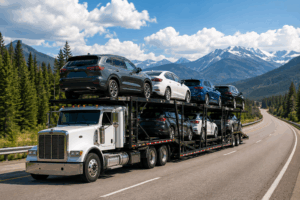
Cross country shipping allows you to move a vehicle over a long distance without personally driving it to the destination. The process generally involves arranging transportation, preparing the automobile, coordinating pickup, loading it onto a carrier, transporting it along the planned route, and completing delivery.
It can be useful when moving, buying or selling a vehicle in another state, relocating seasonally, sending a vehicle to a family member, or transporting a car that is simply too far away to pick up conveniently.
[INSERT CROSS COUNTRY SHIPPING IMAGE HERE]
Image alt text: Cross country shipping with vehicles traveling on an open auto carrier
How Does Cross Country Shipping Work?
The basic cross country shipping process can be broken into several stages:
- Provide your vehicle and route information.
- Discuss transportation requirements.
- Coordinate carrier pickup.
- Prepare the vehicle.
- Complete the pickup inspection.
- Load the automobile onto the carrier.
- Transport it toward the destination.
- Coordinate delivery and inspect the vehicle.
Understanding these steps beforehand can make long-distance vehicle transportation easier to manage.
What Information Is Needed to Ship a Vehicle?
Accurate information helps an auto transportation provider understand the shipment.
Be prepared to provide:
- Vehicle year
- Make
- Model
- Pickup city or ZIP code
- Delivery city or ZIP code
- Vehicle operating condition
- Significant modifications
- Preferred transportation dates
- Open or enclosed transport preference
If you’re purchasing a vehicle online and don’t have every detail yet, provide the information available and update it when necessary.
Open vs. Enclosed Long-Distance Transport
One important decision is whether to use open or enclosed transportation.
Open Auto Transport
Open carriers are commonly used to transport everyday passenger vehicles over long distances.
They can carry multiple automobiles and are suitable for many cars, SUVs, pickups, and vans.
Vehicles are exposed to normal weather and road conditions during transportation.
Enclosed Vehicle Transport
Enclosed carriers provide additional protection from direct weather and road exposure.
They may be considered for:
- Classic cars
- Collector vehicles
- Exotic automobiles
- Luxury cars
- Restored vehicles
- Particularly valuable automobiles
When arranging cross country shipping, make sure you understand which transportation method is being discussed.
How Should You Prepare for Cross-Country Vehicle Transport?
Preparation can help make pickup more efficient.
Before the carrier arrives:
- Remove valuables and unnecessary belongings.
- Have the keys available.
- Make sure the vehicle is accessible.
- Secure loose exterior accessories.
- Check for significant fluid leaks.
- Disclose mechanical problems.
- Mention significant modifications.
- Take clear photographs.
- Confirm your contact information.
The goal is to have the automobile ready when the carrier arrives.
Why Vehicle Condition Matters
A vehicle that doesn’t run normally may have different loading requirements.
Before arranging long-distance vehicle shipping, explain whether the automobile:
- Starts
- Drives
- Rolls
- Steers
- Brakes
Don’t simply describe a vehicle as “non-running” if you can provide more specific information.
For example, a car that doesn’t start but rolls and steers presents a different loading situation than a damaged automobile with locked wheels.
Accurate information helps transportation providers evaluate the shipment before pickup.
What Happens During Vehicle Pickup?
Pickup generally includes an inspection of the automobile before it is loaded.
You should also inspect the vehicle yourself and take photographs showing its condition.
Photograph:
- Front
- Rear
- Both sides
- Wheels
- Windshield
- Existing scratches or dents
- Other noticeable damage
Good photographs provide a useful record of the vehicle’s condition before cross country shipping begins.
After the appropriate pickup procedures are completed, the automobile can be loaded and secured for transportation.
Can a Carrier Pick Up at Your House?
Vehicle transportation can often be coordinated as close to the requested location as safely and legally practical.
However, large auto carriers need significant space.
Potential access problems include:
- Narrow streets
- Tight turns
- Low tree branches
- Gated entrances
- Steep roads
- Weight restrictions
- Parking restrictions
- Limited loading areas
If an exact address isn’t suitable, the driver and customer may coordinate a nearby accessible location.
This can apply at both pickup and delivery.
What Happens While Your Vehicle Is in Transit?
During long-distance auto transport, the carrier travels toward the destination while following its transportation schedule.
An auto carrier may be transporting several customer vehicles.
That means the route can include other scheduled pickups and deliveries rather than being a nonstop trip involving only your automobile.
Weather, traffic, construction, road closures, carrier stops, and other conditions can also affect progress.
How Long Does Cross-Country Auto Transport Take?
Transportation time depends on the specific shipment.
Factors affecting the vehicle shipping timeline can include:
- Total distance
- Route
- Pickup location
- Delivery location
- Carrier schedule
- Weather
- Traffic
- Road construction
- Other scheduled stops
Longer distances generally require more transit time, but mileage shouldn’t be used by itself to predict an exact arrival.
Commercial drivers must also operate safely and follow applicable driving and rest requirements.
Why Are Pickup and Delivery Dates Often Estimates?
A vehicle carrier operates on public roads where conditions can change.
Traffic accidents, construction, severe weather, road closures, and other events may affect a cross country shipping schedule after transportation has already started.
Carrier routes may also include multiple vehicles.
For these reasons, it’s important to understand how your transportation provider describes pickup and delivery dates.
If you have an important deadline, communicate it before transportation is arranged.
Can You Ship an SUV or Pickup Across the Country?
Yes, many types of automobiles can be transported long distance.
These can include:
- Passenger cars
- SUVs
- Pickup trucks
- Vans
- Classic vehicles
- Luxury automobiles
Larger or modified vehicles should be accurately described because dimensions and weight can affect loading requirements.
Lift kits, oversized tires, lowered suspension, roof accessories, and other significant modifications should be disclosed.
Can You Ship a Car You Bought Online?
Yes. Cross country shipping can be useful when buying a vehicle located far from home.
Transportation may be coordinated from locations such as:
- Dealerships
- Private sellers
- Auctions
- Other pickup locations
Before arranging transportation, confirm when and where the automobile can be released.
Make sure the person releasing the vehicle knows about the transportation arrangements and can provide access when needed.
How Should You Prepare for Delivery?
Keep your contact information current while the vehicle is in transit.
If someone else will accept the automobile, make sure that person’s availability is coordinated.
At delivery, inspect the vehicle and compare its condition with your pre-transport photographs and applicable transportation documentation.
Taking a few minutes to inspect the automobile is an important final step in long-distance car transport.
How Do You Research an Auto Transport Provider?
Price shouldn’t be your only consideration when choosing transportation.
Make sure the provider understands:
- Your actual vehicle
- Vehicle condition
- Pickup location
- Destination
- Transportation dates
- Open or enclosed transport preference
- Significant modifications
You can research motor carrier information through the Federal Motor Carrier Safety Administration and find additional federal transportation information through the U.S. Department of Transportation.
Webster Hauling also has an A+ rating with the Better Business Bureau.
Cross Country Shipping FAQs
Can I Ship a Vehicle From One State to Another?
Yes. Interstate and cross country shipping can be used to transport automobiles between states without requiring the owner to drive the vehicle to its destination.
Is Open Transport Suitable for Long Trips?
Open auto carriers are commonly used for long-distance transportation of everyday passenger vehicles. Enclosed transportation is another option when additional protection from direct road and weather exposure is desired.
Can a Non-Running Vehicle Be Shipped?
Transportation may be possible, but loading requirements can differ. Explain whether the automobile starts, drives, rolls, steers, and brakes.
Does Someone Need to Be Present at Pickup?
Pickup arrangements need to include access to the vehicle, keys, and completion of the appropriate transportation procedures. If the owner can’t be present, discuss whether another person can handle the pickup.
Can Weather Delay Cross-Country Transport?
Yes. Severe weather and unsafe road conditions can affect a vehicle transport schedule. Safety should take priority over maintaining an estimated arrival time.
For more answers about vehicle transportation, visit Webster Hauling’s Frequently Asked Questions page.
Plan Your Cross Country Shipping
Successful cross country shipping starts with accurate vehicle information, realistic scheduling, proper preparation, and clear communication.
Distance, route, carrier availability, weather, traffic, vehicle condition, and pickup and delivery accessibility can all influence the transportation process.
Webster Hauling helps customers coordinate long-distance vehicle transportation for moves, purchases, sales, relocations, and other transportation needs.
Have your vehicle year, make, model, condition, pickup location, destination, and preferred dates ready when you contact Webster Hauling.
