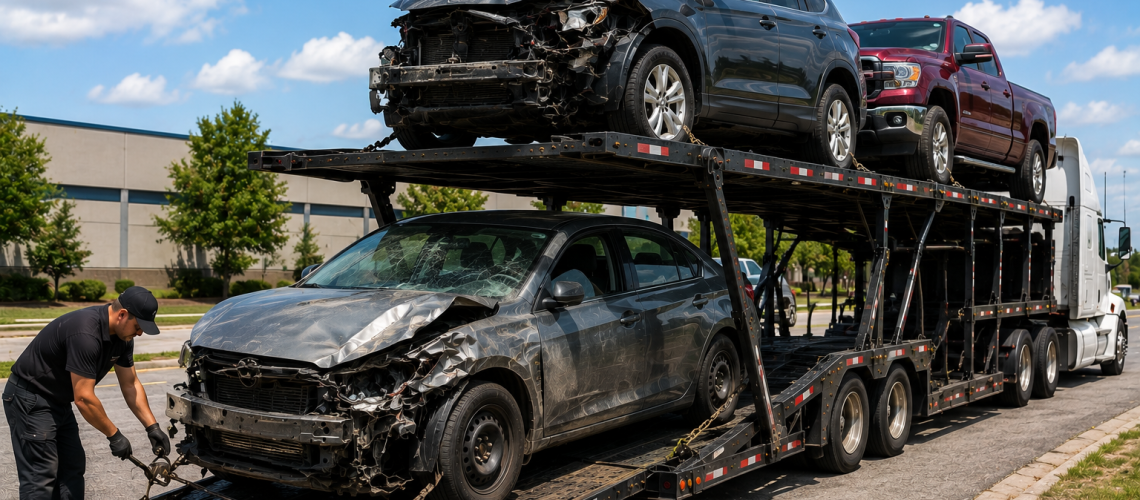
Damaged vehicle transport can be arranged for wrecked, mechanically damaged, partially dismantled, and non-running automobiles, but accurate information is essential. The transportation provider needs to understand the vehicle’s condition before pickup so possible loading and carrier requirements can be evaluated.
A damaged car that still starts, drives, steers, and brakes presents a very different situation from one with broken suspension, locked wheels, severe collision damage, or loose body components.
How Does Damaged Vehicle Transport Work?
Damaged vehicle transport starts with a detailed description of the automobile’s current condition.
Be prepared to explain whether it:
- Starts
- Drives
- Rolls freely
- Steers
- Brakes
- Has inflated tires
- Has accessible keys
- Has collision damage
- Has loose or missing components
Photographs can also help communicate damage that is difficult to describe.
Why Does Vehicle Condition Matter for Damaged Transport?
Condition can directly affect damaged vehicle transport because collision or mechanical problems may change how an automobile can be loaded and unloaded.
Important issues can include:
- Broken suspension
- Locked wheels
- Flat tires
- Steering damage
- Brake problems
- Fluid leaks
- Loose body panels
- Missing components
Don’t describe a severely damaged automobile simply as “non-running.” Explain its mobility and physical condition as accurately as possible.
What Equipment May Be Needed for Wrecked Car Transport?
Equipment requirements depend on the automobile’s condition and available carrier.
A wrecked vehicle that rolls and steers can present a different loading situation from one with seized wheels or collapsed suspension.
When arranging damaged vehicle transport, disclose significant mobility problems before scheduling. This gives the transportation provider an opportunity to evaluate possible loading requirements before the carrier arrives.
Can a Car With Collision Damage Be Shipped?
Potentially. The extent and location of the damage matter.
Tell the provider about damage involving the:
- Wheels
- Suspension
- Steering
- Brakes
- Engine compartment
- Body panels
- Glass
- Undercarriage
A vehicle may appear movable while having mechanical damage that affects loading.
Accurate information is important when coordinating wrecked vehicle transport.
How Should You Prepare for Damaged Vehicle Transport?
Before damaged vehicle transport, make sure the automobile is accessible and its condition has been accurately documented.
Consider these steps:
- Have the required keys available.
- Remove valuables and unnecessary belongings.
- Check whether the tires hold air.
- Disclose significant fluid leaks.
- Explain mechanical problems.
- Secure loose components when appropriate.
- Document existing collision damage.
- Confirm whether the vehicle rolls.
- Confirm whether it steers and brakes.
- Take clear photographs.
Do not wait until pickup to disclose major damage or mobility problems.
Does a Damaged Vehicle Need to Roll?
Whether the automobile rolls freely is important information for damaged vehicle transport.
Tell the transportation provider if it has:
- Locked wheels
- Flat tires
- Missing wheels
- Seized brakes
- Broken suspension
- Steering damage
A vehicle that rolls normally can present a much different loading situation from one that cannot move.
If you’re uncertain about its condition, say so rather than guessing.
What Should You Photograph Before Pickup?
Take photographs from several angles before transportation.
Capture:
- Front
- Rear
- Both sides
- Roof
- Wheels and tires
- Windshield
- Collision areas
- Missing components
- Loose bodywork
- Existing scratches and dents
Close-up photographs of significant damage can be especially useful.
These images provide useful documentation for damaged vehicle transport and can help communicate the vehicle’s condition before pickup.
Can a Vehicle With Broken Suspension Be Transported?
Potentially, but suspension damage should be disclosed before transportation is arranged.
Broken suspension can affect ground clearance, wheel movement, steering, and the automobile’s ability to roll.
Photos and an accurate description can help the provider understand the situation when evaluating damaged car transport.
Do Loose Parts Affect Wrecked Vehicle Shipping?
They can.
Collision-damaged automobiles may have loose:
- Bumpers
- Trim
- Body panels
- Underbody pieces
- Mirrors
- Other components
Tell the transportation provider about loose or partially detached parts before pickup.
A vehicle should not arrive at the carrier with significant damage that wasn’t previously disclosed.
Can a Carrier Pick Up From a Body Shop?
Depending on the arrangements, damaged vehicle transport may be coordinated from a body shop, repair facility, dealership, auction, storage yard, residence, or another suitable location.
Before pickup, confirm:
- The vehicle is ready for release.
- The keys are available.
- Release requirements are complete.
- The facility knows about the pickup.
- The automobile is accessible.
- The correct contact person is available.
These details become particularly important when the owner won’t be present.
How Does Carrier Access Affect Damaged Vehicle Transport?
Carrier access can be especially important when an automobile cannot move normally.
Large auto carriers need sufficient maneuvering and loading space.
Potential problems include:
- Narrow streets
- Crowded storage yards
- Parking garages
- Tight parking lots
- Steep driveways
- Gated entrances
- Weight restrictions
- Limited loading space
An accessible pickup area can make damaged vehicle transport easier to coordinate and reduce avoidable complications.
Does Damaged Vehicle Transport Cost More?
It can. Damaged vehicle transport may require different loading considerations from transportation of a fully operational automobile.
Pricing can also depend on:
- Distance
- Route
- Vehicle size
- Extent of damage
- Operating condition
- Pickup and delivery locations
- Carrier availability
- Equipment requirements
Because damaged automobiles vary greatly, pricing should be based on the actual vehicle rather than a generic rate for every wrecked car.
How Does Distance Affect Wrecked Vehicle Transport?
Distance matters, but it isn’t the only factor affecting transportation timing.
Schedules can also depend on:
- Route
- Carrier availability
- Vehicle condition
- Equipment requirements
- Pickup location
- Destination
- Weather
- Traffic
- Road closures
Realistic scheduling is important for wrecked vehicle transport, particularly when the automobile requires additional loading consideration.
What Happens at Damaged Vehicle Pickup?
The automobile should be accessible when the carrier arrives.
The appropriate keys and contact person should also be available.
The carrier should already know whether the vehicle:
- Starts
- Rolls
- Steers
- Brakes
- Has damaged suspension
- Has flat tires
- Has loose components
- Has significant collision damage
Clear communication at pickup is an important part of damaged vehicle transport.
Can Weather Affect Damaged Vehicle Transport?
Yes. Auto carriers operate on public highways and can encounter severe storms, snow, ice, high winds, accidents, construction, and road closures.
Those conditions can affect transportation schedules.
Weather and highway conditions should therefore be considered when planning damaged vehicle transport, especially over longer distances.
What Should You Check at Delivery?
Compare the automobile with your pre-transport photographs and applicable transportation documentation.
Review:
- Collision-damaged areas
- Wheels and tires
- Glass
- Loose components
- Body panels
- Previously documented marks
Keep your original photographs available during the inspection.
A careful comparison helps document the vehicle’s condition at the completion of wrecked car transport.
How Do You Choose a Damaged Vehicle Transport Provider?
Price matters, but it shouldn’t be the only consideration when arranging damaged vehicle transport.
Make sure the transportation provider understands the exact condition of the automobile, particularly whether it starts, rolls, steers, brakes, or has significant structural or mechanical damage.
Consumers can research motor carrier information through the Federal Motor Carrier Safety Administration and federal transportation information through the U.S. Department of Transportation.
Webster Hauling also has an A+ rating with the Better Business Bureau.
Damaged Vehicle Transport FAQs
Can You Transport a Wrecked Car?
Potentially. Explain whether the automobile rolls, steers, and brakes when arranging damaged vehicle transport, and disclose significant collision or mechanical damage.
Can a Car With Flat Tires Be Shipped?
Potentially, but flat or damaged tires should be disclosed because they can affect movement and loading.
Can a Vehicle With Missing Parts Be Transported?
Potentially. Tell the provider which components are missing and whether their absence affects the automobile’s ability to roll, steer, brake, or be loaded.
Can an Auction Release a Damaged Car?
Depending on the arrangements, pickup may be coordinated with an auction. Confirm release requirements, operating hours, keys, vehicle location, condition, and carrier access.
Should I Send Photos of the Damage?
Photos can be useful when collision damage, missing components, suspension problems, or other conditions may affect damaged vehicle transport.
For additional transportation information, visit Webster Hauling’s Frequently Asked Questions page.
Plan Your Damaged Vehicle Transport
Successful damaged vehicle transport starts with an accurate description of the automobile.
Whether it starts, rolls, steers, and brakes—as well as the extent of its damage, pickup location, route, carrier availability, and loading considerations—can influence transportation planning.
Webster Hauling helps customers coordinate vehicle transportation based on the automobile, route, condition, and shipping requirements.
Have the year, make, model, exact operating condition, damage information, pickup location, destination, and preferred transportation dates available when discussing your shipment.
