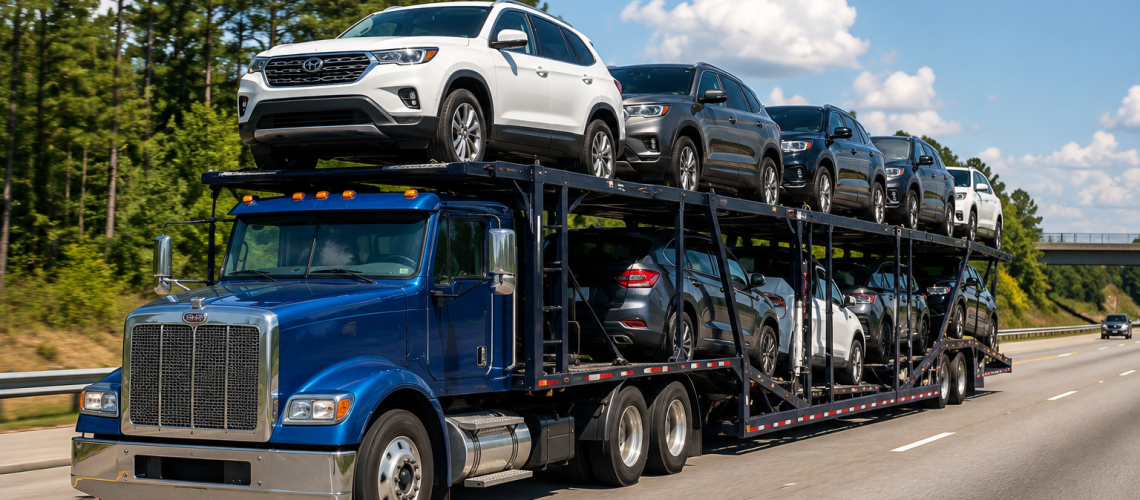
Auto transport time depends on several factors, including distance, route, carrier availability, weather, traffic, pickup and delivery locations, and vehicle condition. Longer trips generally require more transit time, but mileage alone cannot determine exactly when a vehicle will arrive.
Understanding how vehicle transportation works can help you plan around pickup and delivery without relying on an unrealistic exact arrival time.
[INSERT AUTO TRANSPORT TIME IMAGE HERE]
Image alt text: Auto transport time for vehicles traveling on an open car carrier
What Determines Auto Transport Time?
Several factors can influence auto transport time:
- Total transportation distance
- Pickup and delivery locations
- Carrier availability
- Transportation route
- Weather conditions
- Traffic and construction
- Other scheduled vehicle stops
- Vehicle condition
- Safe driving requirements
Some factors are known when transportation is scheduled. Others can change while the carrier is on the road.
How Distance Affects Vehicle Shipping Time
Distance is one of the biggest factors affecting vehicle shipping time.
A vehicle moving between neighboring states has a different transportation route than one traveling across the country.
However, estimating delivery isn’t as simple as dividing the mileage by highway speed.
Auto carriers frequently transport multiple vehicles. Drivers may have scheduled pickups and deliveries along their route, and those stops are part of normal vehicle transportation.
Pickup Scheduling vs. Transit Time
It’s useful to distinguish between pickup scheduling and actual car transport time.
Pickup scheduling involves coordinating a carrier and arranging when the automobile will be collected.
Transit time begins after the vehicle is loaded and starts traveling toward the destination.
When discussing an estimated transportation schedule, ask whether it refers to pickup, transit, or the complete process.
That distinction can make planning much easier.
Does the Transportation Route Matter?
Yes. The route can influence auto transport time even when two shipments cover similar distances.
Major interstate corridors may have different carrier availability than rural or remote areas.
The carrier may also encounter:
- Construction
- Detours
- Road closures
- Congestion
- Accidents
- Seasonal road conditions
Transportation routes can change when road or weather conditions require drivers to use an alternative path.
Can Weather Affect Auto Transport Time?
Yes. Severe weather can affect auto transport time when conditions make commercial driving slower or unsafe.
Potential weather problems include:
- Snow
- Ice
- Heavy rain
- High winds
- Severe thunderstorms
- Flooding
- Reduced visibility
Remember that weather at your pickup and delivery locations doesn’t represent conditions across the entire route.
A cross-country carrier can encounter very different weather hundreds of miles away.
Safety should take priority when road conditions become dangerous.
Why Traffic Can Affect Your Delivery
Traffic is another factor in a vehicle transport timeline.
Commercial carriers travel through the same congestion, construction zones, accidents, and road closures as other highway traffic.
A carrier traveling a long distance may pass through several major metropolitan areas during one trip.
Unexpected congestion can affect progress even when the transportation schedule was reasonable when the vehicle was picked up.
Do Other Vehicle Stops Affect Transport Time?
They can.
An open auto carrier commonly transports several vehicles at the same time. The driver’s route may therefore include multiple pickups and deliveries.
These stops are a normal part of vehicle shipping time.
Vehicles may also need to be repositioned as other automobiles are loaded or unloaded.
This is one reason standard multi-vehicle transportation differs from a dedicated trip directly between two addresses.
Can Your Pickup Location Affect the Schedule?
Yes. Accessibility can influence auto transport time, especially during pickup and delivery.
Large commercial carriers require substantial space to maneuver.
Potential obstacles include:
- Narrow residential streets
- Low tree branches
- Tight turns
- Steep roads
- Gated entrances
- Weight restrictions
- Parking restrictions
- Limited loading space
When a carrier can’t safely access an exact address, the driver and customer may coordinate a nearby accessible meeting location.
Discussing possible access problems beforehand can help prevent unnecessary delays.
Why Driver Safety Requirements Matter
Commercial drivers operate under federal safety requirements, including rules governing driving and rest periods.
Because drivers require appropriate rest, car shipping time shouldn’t be calculated by assuming a carrier can continuously travel at highway speed.
Safe vehicle transportation has to account for responsible commercial driving practices.
You can research motor carrier information through the Federal Motor Carrier Safety Administration and find additional federal transportation information through the U.S. Department of Transportation.
Does Vehicle Condition Affect Shipping?
It can.
A vehicle that starts and drives normally may have different loading requirements from a non-running or damaged automobile.
Before transportation, tell the provider whether the vehicle:
- Starts
- Drives
- Rolls
- Steers
- Brakes
Unexpected mechanical or loading problems at pickup can affect the vehicle transportation schedule.
If you’re shipping an inoperable vehicle, provide accurate information before the carrier arrives.
How Can You Help Avoid Pickup Delays?
Good preparation can help keep your auto transport schedule moving.
Before pickup:
- Have the vehicle accessible.
- Have the necessary keys available.
- Remove valuables and unnecessary belongings.
- Secure loose exterior accessories.
- Check for significant fluid leaks.
- Disclose mechanical problems.
- Mention significant modifications.
- Confirm your contact information.
- Take photographs of the vehicle.
If another person will release the vehicle, make sure they understand the transportation arrangements.
Preparation won’t prevent weather or highway delays, but it can help prevent avoidable problems at pickup.
Should You Book Vehicle Transportation Early?
Waiting until the last minute can make scheduling more difficult, particularly when your transportation dates aren’t flexible.
Your overall auto transport time involves both carrier scheduling and the actual trip.
Planning earlier can be particularly helpful when vehicle transportation is connected to:
- Moving to another state
- Buying a vehicle online
- Selling a vehicle
- College
- Military relocation
- Seasonal relocation
- An auction purchase
- Airline travel
If you have an important deadline, explain it when discussing transportation.
Why Delivery Dates Are Usually Estimates
Vehicle transportation takes place on public roads under changing conditions.
Weather, traffic, construction, road closures, carrier stops, and other circumstances can affect car delivery timing after the trip begins.
That’s why it’s important to understand how the transportation provider describes pickup and delivery dates.
Avoid scheduling another important event around an assumed exact arrival time unless the transportation arrangement specifically supports it.
Auto Transport Time FAQs
How Long Does Auto Transport Take?
Actual auto transport time varies according to distance, route, carrier scheduling, weather, traffic, stops, and other transportation conditions. Longer routes generally require more transit time than shorter routes.
Does Transport Time Start When I Book?
Not necessarily. Booking or arranging transportation, carrier pickup, and actual transit can represent different stages of the process.
Can Bad Weather Delay a Car Carrier?
Yes. Snow, ice, severe storms, flooding, high winds, and unsafe road conditions can affect a vehicle shipping timeline.
Does a Non-Running Car Take Longer?
A non-running vehicle may require different equipment or loading arrangements. Disclose its exact condition before transportation is arranged.
Can I Get an Exact Delivery Time?
Transportation providers can discuss estimated timing, but traffic, weather, road conditions, scheduled stops, and other circumstances may affect arrival.
How Can I Make Pickup Go Faster?
Have the vehicle accessible and ready, provide accurate condition information, keep the keys available, and make sure the carrier has current contact information.
For additional information about preparing and planning vehicle transportation, visit Webster Hauling’s Frequently Asked Questions page.
Plan Your Auto Transport Time
Planning around auto transport time means considering more than the mileage between pickup and delivery.
Distance, route, carrier availability, weather, traffic, vehicle condition, accessibility, and safe commercial driving requirements can all influence transportation.
Webster Hauling helps customers coordinate vehicle transportation based on their route, vehicle, and scheduling needs.
Have your vehicle information, pickup location, destination, condition, and preferred dates ready when you contact Webster Hauling to discuss your transportation schedule.
